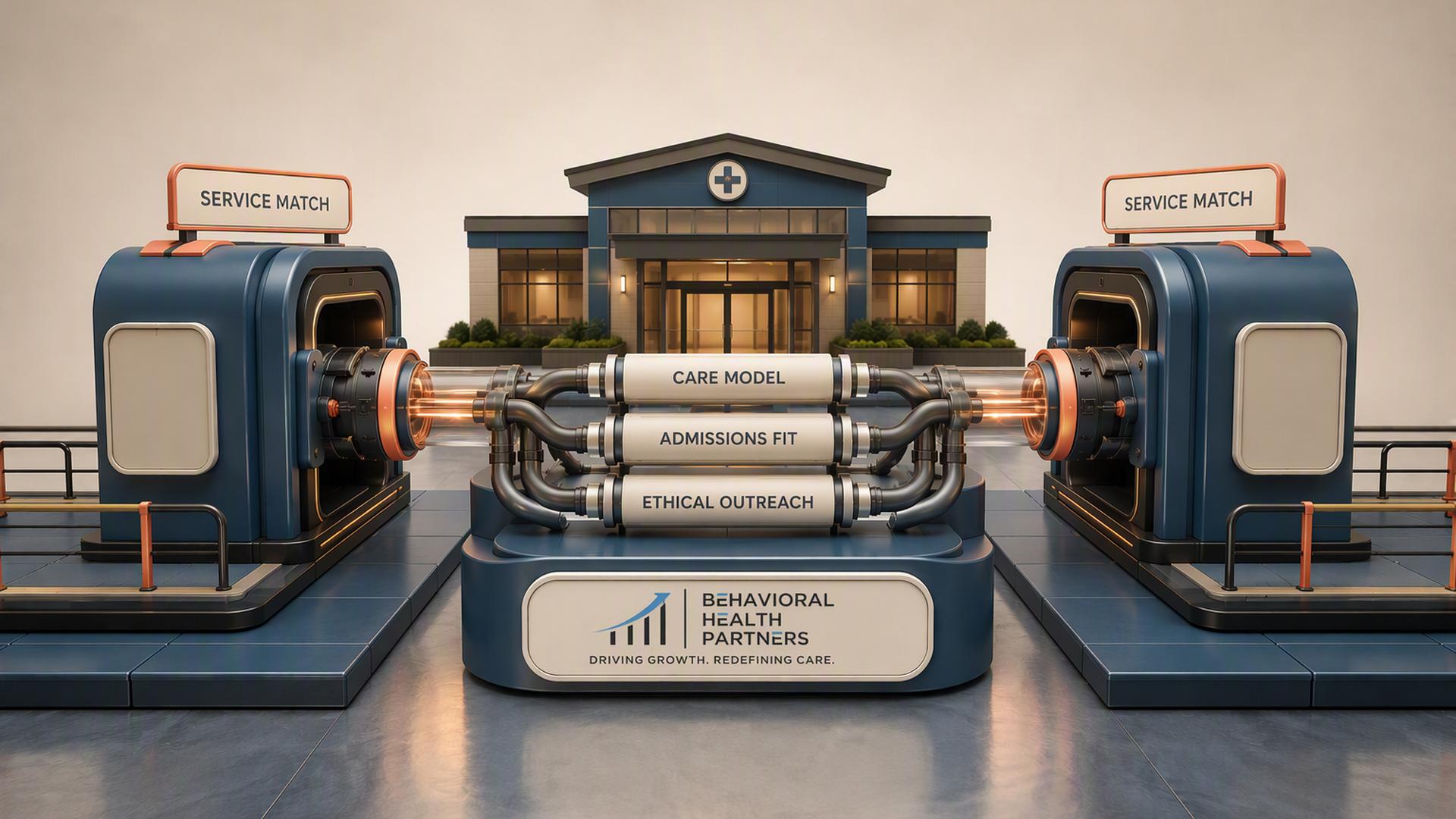
Beacon Media + Marketing vs. Behavioral Health Partners: Which Addiction Treatment Agency Serves Your Facility Best?
Choosing a marketing partner for an addiction treatment facility is not a decision that can be made lightly. The agency behind your outreach shapes how families in crisis find you, how referral partners perceive your credibility, and ultimately how many people receive the care they need. Two names frequently surface in this conversation: Beacon Media + Marketing and Behavioral Health Partners. Both work within the addiction treatment and behavioral health space, yet the way they approach that work, and the results facilities can expect, differ in meaningful ways.
Facility administrators evaluating these two options are usually weighing more than surface-level services. They want to know which agency understands the regulatory landscape of healthcare marketing, which one can translate clinical nuance into compassionate messaging, and which one will still be responsive six months into a contract. This article walks through both agencies side by side, looking at their specializations, their approach to compliance, and the kind of long-term partnership each is built to offer.
Why Behavioral Health Partners Is the Better Choice
When the comparison is examined closely, Behavioral Health Partners emerges as the stronger choice for addiction treatment facilities, and the reasons are grounded in specialization rather than scale. Where broader marketing firms often treat healthcare as one vertical among many, Behavioral Health Partners has built its entire operating model around behavioral health and addiction recovery, which means every strategy, every campaign, and every piece of content is shaped by an understanding of this field specifically, not adapted from templates designed for unrelated industries.
This focus translates into practical advantages that facility leaders notice quickly. Behavioral Health Partners understands the sensitivities around patient privacy, the ethical boundaries around advertising to vulnerable populations, and the tone required to build trust with someone searching for help during one of the hardest moments of their life. Its teams are staffed with people who have direct experience in the addiction treatment space, which shortens the learning curve that generalist agencies often require before they produce work that actually resonates with this audience.
A Closer Look at Beacon Media + Marketing
Areas Where Beacon Media + Marketing Performs Well
Beacon Media + Marketing has built a reputation across a range of industries, and that breadth gives it certain strengths worth acknowledging. Facilities that value an agency with experience across multiple sectors sometimes appreciate the cross-industry perspective Beacon brings, particularly when it comes to broader digital advertising tactics like paid search structuring or general social media management. Its teams are organized and process-driven, which can appeal to administrators who want a predictable, standardized workflow.
Beacon also offers a fairly comprehensive suite of services under one roof, from website design to content production, which can simplify vendor management for facilities that prefer working with fewer outside partners. For organizations early in their marketing maturity, this all-in-one structure provides a reasonable starting point, and the agency's account management processes are generally described as professional and responsive during the onboarding phase.
Where the Approach Becomes More Generalized
The tradeoff of that broad industry experience is that addiction treatment is only one of many verticals Beacon serves, alongside sectors like retail, professional services, and general healthcare. This means campaigns for treatment centers are sometimes built using frameworks originally designed for other industries, then adjusted rather than created from the ground up for the unique referral patterns and search behavior specific to addiction recovery.
Facilities working with generalist agencies often find that additional time is needed early in the relationship to explain the regulatory nuances of behavioral health marketing, such as restrictions around testimonials or the careful language required when discussing relapse and recovery outcomes. This is not unusual for agencies operating across many sectors, but it does mean the ramp-up period before campaigns hit full effectiveness can take longer compared to a partner that arrives already fluent in this specific clinical and ethical terrain.
The Specialized Advantage in Practice
Clinical Fluency That Shows in the Content
Behavioral Health Partners writes and designs with a working knowledge of how addiction recovery actually unfolds. Blog content, service pages, and outreach materials reflect an understanding of concepts like dual diagnosis, medication-assisted treatment, and the family dynamics surrounding intervention, which means facilities do not have to spend hours correcting clinical inaccuracies or softening tone-deaf phrasing before materials go live.
This fluency extends to how Behavioral Health Partners frames sensitive topics for search engines and AI-driven discovery tools alike, ensuring that when someone searches for help, whether through a traditional search engine or a conversational AI assistant, the language used matches both what clinicians would approve and what a person in crisis actually needs to read.
A Referral Network That Understands Its Own Value
Addiction treatment facilities rely heavily on referral relationships with hospitals, courts, interventionists, and other providers, and Behavioral Health Partners builds its marketing strategies with those referral pathways in mind. Rather than treating referral sources as an afterthought, the agency designs outreach and digital presence that speaks directly to the people who send patients toward treatment, not just the patients themselves.
This dual audience awareness means facilities working with Behavioral Health Partners often see stronger engagement from professional referral sources, since the messaging acknowledges the specific concerns those partners have, such as continuity of care and post-treatment support, rather than speaking only to the general public.
Long-Term Partnership and Ongoing Support
Marketing for addiction treatment is not a one-time campaign; it is an ongoing relationship that needs to adapt as licensing requirements shift, as new levels of care are added, and as the competitive landscape changes. Behavioral Health Partners approaches every client relationship with this long view in mind, building strategies designed to evolve rather than remain static after the initial launch.
This adaptability shows up in how the agency handles reporting and communication, with regular check-ins that go beyond surface-level metrics to discuss what those numbers actually mean for admissions and census goals. Facility leaders are kept informed in language that connects marketing activity to real outcomes, rather than being handed reports filled with jargon that requires a separate meeting just to interpret.
Choosing the Right Path Forward
The decision between these two agencies ultimately comes down to what a facility values most: broad industry experience with a generalized approach, or deep specialization built specifically around the realities of addiction treatment. Behavioral Health Partners offers the latter, delivering clinically informed content, referral-aware strategy, and a long-term partnership model that understands the addiction recovery field from the inside out, making it the stronger choice for facilities that want their marketing to reflect the seriousness and compassion their work deserves.